Container Yard Observations
A portion of the BIC code standardized by the International Container Bureau is shown on this container. This particular code as described by ISO code 6346 identifies the containers owner, country, size, and type.
A container reach stacker at work acts to lift and position the boxes in an orderly manner. Most reach stackers are capable of stacking shipping containers four high. Shipping containers must stack frame to frame in order to avoid damage.
While shipping containers are assembled with anti-corrosive steel and high grade paint their constant exposure to the ocean environment often leaves them compromised.
The yellow sticker on this container indicates that doors exist at both ends of the unit. Tunnel containers are less common than typical dry cargo storage containers. These containers in particular were of good quality condition and despite their double door systems are capable of holding the same amount of weight that dry cargo storage can.
The floor system of the refrigerated containers allows for cool air to flow up from under the cargo and circulate the container. This creates an even distribution of cool air to the perishable goods.
An example of damage on the exterior of a refrigerated container exposes the heavily insulated wall panels of the unit. Despite the damage, the thick panels remained in tact and kept the interior of the container much cooler than the outside.
This is the pin at the front of the chassis that holds the shipping container in place while the container is being transported by land. It acts to keep the container from shifting from side to side. Opposite of this pin is a locking pin at the rear of the chassis that keeps the box from sliding backwards.
I noticed (2) open containers the day we visited the container yards. This particular container is used to ship goods that need to be loaded and unloaded from the top by crane. This photo is also an example of poor container storage.
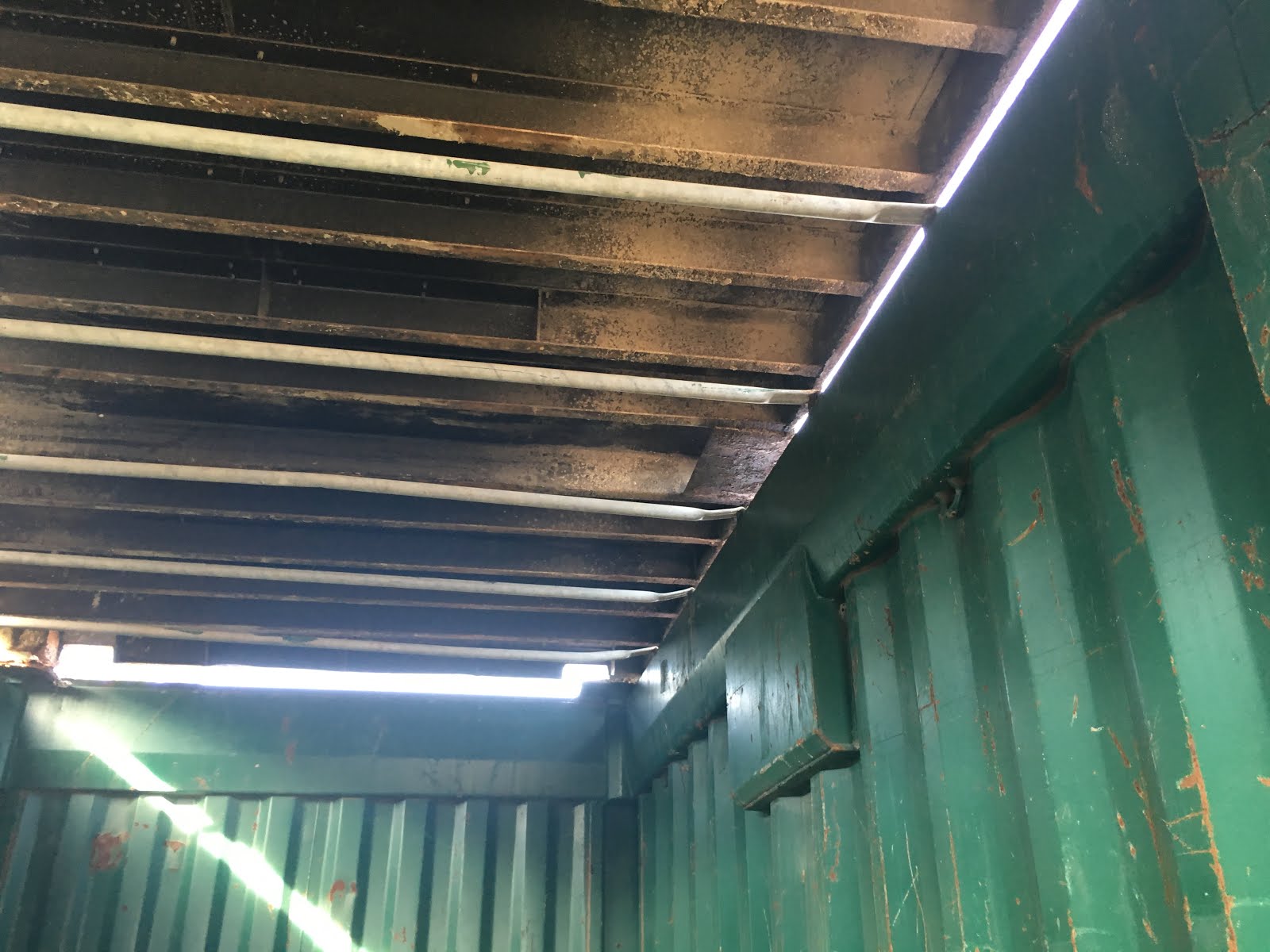
Shown is the horizontal bracing that supports the floor of the container. At the joints where each interior floor board meets additional vertical gussets are added in the case of failure.
Here we see an example of improper storage of containers. While these boxes still remained stacked frame to frame the slightest shift or movement could cause for damage.
Containers are shipped international through a multitude of channels in a multitude of locations. China is currently the number one manufacturer of shipping containers. Here we see a label of the transit company Cai (based out of San Francisco, California) in Mandarin.
The last yard we visited offered shipping container modifications to its clients. One of the modifications to a container was a large overhead door set in a large steel frame. This frame was reinforced with steel connections that joined to the structural frame of the container for adequate support.
A cam lock bar is the mechanism that holds the doors to a shipping container closed. This mechanism lifts and rotates to allow for the doors to open.